
ORNITHOPHOBIA
Occupational Mental Health: Stress, Workplace Depression & Clinical Management
Ornithophobia, an irrational fear of birds, ranges from birds of prey to common household parakeets. The origin of this fear is unclear, but it may stem from a long-standing fear rooted in a past negative experience that is no longer remembered.
Many individuals encounter significant challenges when going outdoors daily, as unexpected encounters are commonplace. Consequently, a considerable number of individuals develop agoraphobia, a condition characterised by a fear of leaving their homes due to the possibility of encountering birds. Symptoms may include feelings of danger, heart palpitations, sweating, shaking, fear of losing control, and shortness of breath.
Pigeons are the most feared bird among people with ornithophobia. This is because they are the most commonly observed birds, along with seagulls. Environmental factors can also contribute to this phobia. In 1963, after the release of Alfred Hitchcock’s film “The Birds,” the percentage of people with ornithophobia increased considerably due to mass hysteria.
Here is a video on ornithophobia that explores its impact on individuals and potential treatment options.
PHOBIAS — ORNITHOPHOBIA & SECONDARY DEPRESSION | RITA'S STORY
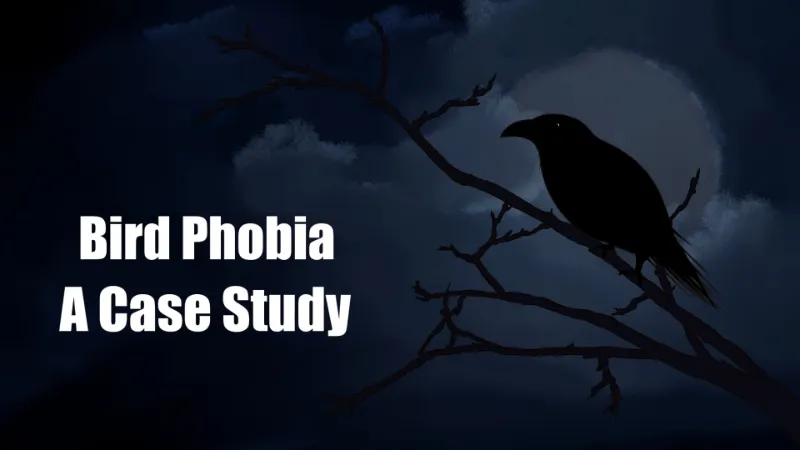
A real-world clinical case study exploring how severe bird phobia led to functional depression, isolation, and daily disruption, followed by successful CBT and systematic desensitisation therapy.
Case Presentation & Treatment Journey
For Rita, her aversion to birds evolved far beyond a simple fear into a debilitating phobia that dictated her daily routine and severely strained her personal and social connections.
Her fear permeated every facet of life—from avoiding essential outdoor activities and changing her daily commute to hesitating to visit friends or family with pet birds. Over time, the severe social and physical limitations imposed by her phobia manifested as secondary clinical depression.
Seeking professional help proved transformative. Rita underwent a structured therapeutic program utilising Cognitive Behavioural Therapy (CBT) and systematic desensitisation:
- Gradual Exposure: Through dedicated sessions, Rita confronted her phobic triggers in a controlled, step-by-step hierarchy—moving from mental imagery to real-world exposure.
- Emotional Regulation: She learned to dismantle automatic catastrophic thoughts and manage autonomic hyperarousal.
- Functional Recovery: As desensitisation progressed, Rita regained control over her emotional responses, resolving her depressive symptoms and reclaiming her social autonomy and confidence.
This program offers an insightful glimpse into Rita’s triumph over her phobia, highlighting the effectiveness of behavioural interventions. Designed as an accessible introduction, it caters to staff, students, and individuals seeking guidance toward recovery.
Clinical Commentary & Neurobiology
Aetiology & Environmental Triggers
- Unconscious Conditioning: The precise origin of ornithophobia is often multifactorial. It often stems from negative early childhood experiences (e.g., being swooped at or bitten) that are forgotten consciously but remain encoded as fear memories in the amygdala.
- Most Feared Species: Urban pigeons and seagulls are the primary triggers because of their unpredictable flight patterns, rapid movements, and dense presence in public spaces.
- Societal & Mass Hysteria Factors: Environmental and cultural inputs can amplify phobic prevalence. Notably, following the 1963 release of Alfred Hitchcock’s film The Birds, documented rates of ornithophobia spiked significantly due to mass anxiety and media-induced vicarious conditioning.
Somatic Presentation & Autonomic Hyperarousal
When exposed to visual or auditory bird cues, patients experience acute sympathetic activation:
- 🫀 Somatic Symptoms: Tachycardia (racing heart), profuse sweating, muscle tremors, chest discomfort, and dyspnea (shortness of breath).
- 🧠 Cognitive Flares: Intense feelings of immediate danger, fear of physical harm, and fear of losing control.
- 🚪 Secondary Agoraphobia & Depression: Avoidance of public spaces and outdoor travel leads to severe isolation, frequently generating secondary mood breakdown.
Lecture Companion Notes & Treatment Protocols
Evidence-Based Behavioral Interventions
- Systematic Desensitisation: Combining relaxation techniques with a gradual exposure hierarchy (from feathers and static photos to controlled real-world bird observation).
- Cognitive Restructuring: Identifying automatic catastrophic thoughts about bird predictability or physical harm, and replacing them with objective probabilistic reasoning.
- Re-activation Support: Supporting gradual re-engagement with outdoor environments, public transport, and social visits.
Key Clinical Learning Points:
- Urban Ubiquity & Agoraphobia: Unlike rare phobias, the everyday presence of urban birds can quickly escalate unmanaged ornithophobia into secondary agoraphobia.
- Comorbid Depression: Chronic spatial restriction and social withdrawal frequently generate secondary depressive episodes, which resolve when the primary phobia is successfully treated.
- Desensitisation Efficacy: Behavioural exposure combined with cognitive therapy remains the gold standard for managing specific phobia.
Seminar & Reflective Discussion Questions
- How can clinicians differentiate between primary major depression and secondary mood breakdown caused by severe environmental phobias?
- What specific steps should a clinician include when designing a 6-stage exposure hierarchy for a patient severely triggered by urban pigeons?
- In what ways can media portrayals (such as film depictions of animal attacks) induce lasting vicarious fear conditioning in vulnerable individuals?
Information & Support for Patients & Public Viewers
- NHS Talking Therapies (IAPT): Access evidence-based CBT and exposure therapy for specific phobias via self-referral or your GP at nhs.uk/mental-health.
- Anxiety UK: Specialised phobia helplines, exposure workbooks, and therapeutic support groups (Call 03444 775 774 or visit anxietyuk.org.uk).
- Mind Infoline: Confidential guidance on anxiety disorders and patient rights (Call 0300 123 3393).
Clinical Disclaimer & Emergency Note
This module is designed strictly for medical education and healthcare training. Case study materials are presented with clinical consent. Individuals experiencing severe phobic anxiety or secondary depression should consult a qualified GP, psychiatrist, or accredited cognitive behavioural therapist.
© 2025 All Rights Reserved.